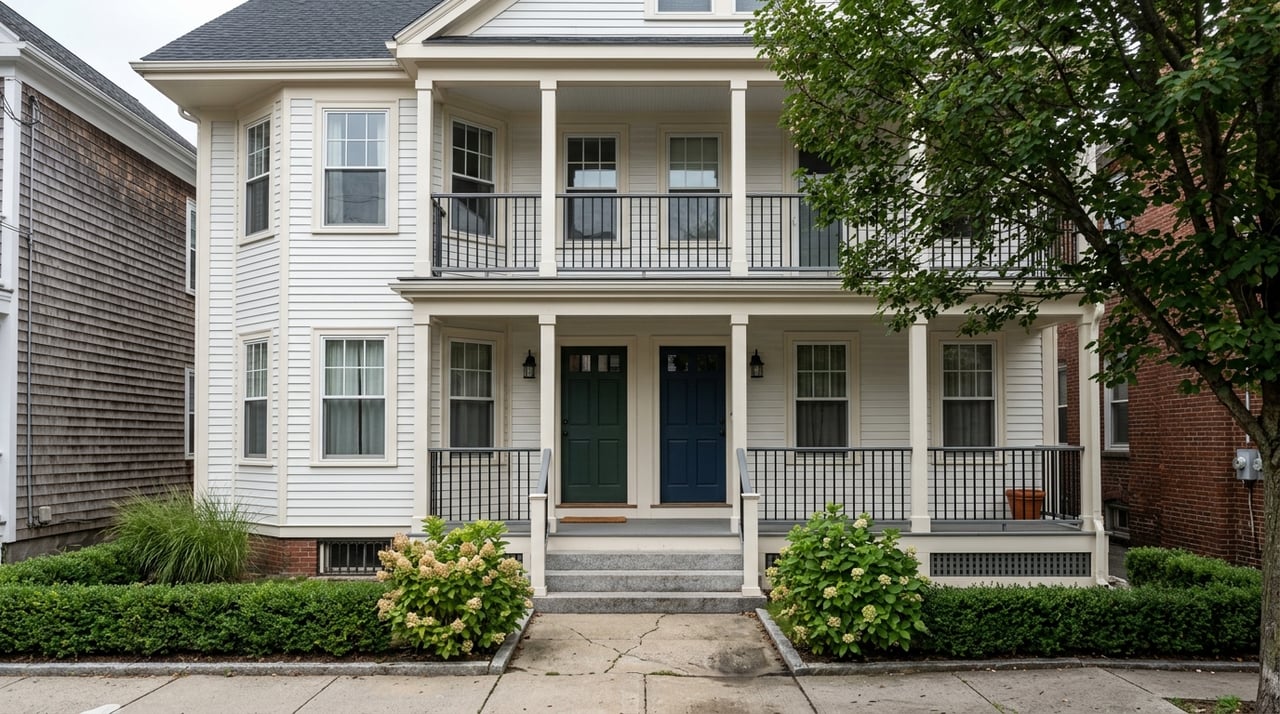
Thinking about buying in Chelsea and wondering if a multi-family is the smarter move than a condo or single-family home? You are not alone. In a city where multi-unit living is part of the local housing fabric, the right choice often comes down to your budget, your comfort with complexity, and whether rental income fits your goals. This guide will help you weigh the pros, tradeoffs, and local checkpoints that matter most in Chelsea. Let’s dive in.
Why multi-family is common in Chelsea
In Chelsea, multi-family housing is not a niche category. It is a major part of how the city lives. Data in local planning materials and ACS-based profiles show that 87% of housing units are in multi-unit structures and 74% are renter-occupied.
That matters because it changes how you should think about the market. In many places, a 2 to 4 unit property may feel like a specialized investment. In Chelsea, it is often a normal part of the buyer conversation, especially for people who want to live in one unit and rent out the others.
Chelsea’s housing stock also supports that pattern. Local planning materials say 44% of residential buildings are small multifamily homes with 2 to 4 units, and 52% of residential buildings are more than 85 years old. So while there is real opportunity here, there is also a strong need for careful property review.
What makes a Chelsea multi-family appealing
For many buyers, the biggest draw is simple: rental income can help offset ownership costs. If you buy a 2 to 4 unit property and live in one unit, the rent from the other units may help with your monthly payment and qualifying power.
This strategy is often called house hacking, or vivir en una unidad y alquilar las otras. In Chelsea, that idea is especially relevant because the city already has a deep supply of small multifamily buildings and a strong rental market.
Recent rent data show a June 2026 average rent of $2,503 per month in Chelsea. Reported averages for 2-bedroom units are $2,974 and 3-bedroom units are $3,273. Those numbers are not a promise for any specific property, but they do show why buyers look closely at multi-family homes here.
As a rough illustration, two similar 2-bedroom rental units could bring in about $5,948 per month before expenses. Three similar 2-bedroom units could total about $8,922 per month before expenses. That is one reason a multi-family can be attractive if your goal is long-term affordability or small-scale investing.
The upfront cost is usually higher
The main tradeoff is price. A Chelsea multi-family usually takes more capital upfront than a condo or a typical citywide home purchase.
Recent market snapshots show a March 2026 median sale price of $440,000 across all home types in Chelsea. Separate market pages show condos at a median listing price of $460,000 and multi-family homes at a median listing price of $925,000. These are different metrics, so they are not a direct apples-to-apples comparison, but they do clearly point in the same direction: multi-family homes tend to cost much more upfront.
That means the right question is not just, “Can this property generate income?” It is also, “Can you comfortably handle the down payment, reserves, repairs, and day-to-day ownership?”
When a multi-family may be the right fit
A Chelsea multi-family may make sense for you if you want more than just a place to live. It can be a strong option if you want your property to support your finances over time.
Here are a few signs it could be a good fit:
- You want to live in one unit and rent the others
- You are comfortable reviewing rent rolls, or lista o historial de rentas
- You want help from rental income when qualifying for a loan
- You are prepared for an older building that may need more upkeep
- You want a property type that is already common in Chelsea’s housing stock
This option often appeals to first-time buyers who want to build equity with income support, as well as small-scale investors looking at 2 to 4 unit buildings.
When a condo or single-family may be better
A multi-family is not automatically the best choice just because Chelsea has a strong rental market. For some buyers, simplicity matters more.
Condo fit in Chelsea
A condo can be a lower-hassle entry point. It may come with less exterior maintenance responsibility, and the upfront price point is often lower than a multi-family.
That said, condos can come with HOA fees, or cuota de condominio, and building rules that limit flexibility. If you want more control over the property or income from multiple units, a condo may feel restrictive.
Single-family fit in Chelsea
A single-family home is often the simplest ownership path. You generally do not have to think about tenants, shared systems between units, or rental paperwork.
The tradeoff is that you usually do not get the same income offset potential. If your priority is privacy and a more straightforward ownership experience, a single-family may be a better match.
Financing can make 2 to 4 units more realistic
For many first-time buyers, financing is the reason a multi-family becomes possible. FHA financing can apply to 1 to 4 unit properties, and HUD states that down payments can be as low as 3.5% for eligible buyers.
Freddie Mac also offers options for owner-occupied 2 to 4 unit properties, and its guidance says rental income from other units can be added to borrower income in qualifying scenarios. Freddie Mac’s Home Possible product also offers down payments as low as 3% for eligible borrowers.
In plain English, that means a 2 to 4 unit Chelsea property may be more reachable than you think if you plan to be an owner-occupant, or propietario ocupante. The details depend on your finances and the property itself, but these programs are one reason small multifamily homes matter so much in Chelsea.
Older buildings need sharper due diligence
Chelsea’s older housing stock creates both character and risk. Since 52% of residential buildings are more than 85 years old, you should expect deeper due diligence on building condition.
In a Chelsea multi-family, common review points include:
- Roof condition
- Plumbing and electrical systems
- Heating setup
- Windows and insulation
- Shared systems between units
- Basement moisture or structural issues
- Parking layout and access
You should also pay close attention to gross rent, or renta bruta, versus actual costs. A property can look strong on paper until repairs, vacancies, and deferred maintenance are added to the picture.
Lead law matters in Chelsea multifamilies
Because many Chelsea properties were built before 1978, lead compliance should be on your checklist from day one. Massachusetts requires lead hazards to be removed or controlled in homes built before 1978 where children under 6 live.
State guidance also says sellers and landlords must notify buyers and tenants about lead risks. For rental properties built before 1978, lead-law notification forms must be signed and kept, and if a child under six will live there, the owner must delead or bring hazards under interim control.
This is one of the most important parts of buying an older multifamily. A property described as lead-safe, or libre de riesgos por plomo, may still need documentation review, so it is smart to verify the status carefully.
Flood zones and waterfront locations
Not every Chelsea property has the same environmental risk profile. City planning documents identify flood hazard areas primarily along Chelsea Creek and a portion of the Mystic River.
If you are looking at a property near the water or in a low-lying area, flood-zone review and insurance review should move higher on your checklist. This does not mean the property is off the table. It means you want a clear understanding of risk, coverage, and monthly cost before you commit.
Zoning and parking can affect value
Chelsea’s zoning code reflects the city’s multi-family character. The code establishes R-2 for two-family and multifamily dwellings and R-3 for higher-density multifamily housing.
There is also a transit-area overlay intended to encourage more multifamily housing near the commuter rail and Silver Line area. For buyers, the practical takeaway is that the property’s exact address and zoning district can affect what is straightforward and what may involve more rules or limitations.
Parking matters too. Chelsea’s code includes off-street parking and shared-parking provisions, and those details can affect daily livability and long-term value. In a dense market, off-street parking, or estacionamiento fuera de la calle, can be a meaningful factor.
Neighborhood context matters
Chelsea is small, but it is not one-size-fits-all. Local planning materials describe Addison Orange and Shurtleff Bellingham as mid-density areas characterized by small multifamily buildings.
That does not make one area better than another. It simply means some parts of Chelsea may line up more naturally with the kind of 2 to 4 unit property you are hoping to find. Hyperlocal guidance matters here because block-by-block differences can affect parking, layout, and the feel of ownership.
A simple way to decide
If you are trying to choose between a Chelsea multi-family, condo, or single-family, start with your real goal. Do you want lower-maintenance ownership, more privacy, or a property that can generate income?
Here is a simple way to frame it:
| Property Type | Best For | Main Tradeoff |
|---|---|---|
| Multi-family | Buyers who want rental income or house hacking | Higher price and more complexity |
| Condo | Buyers who want a lower-hassle entry point | HOA fees and less flexibility |
| Single-family | Buyers who want privacy and a simpler setup | Little or no income offset |
In Chelsea, a multi-family is often the strongest fit when you want to combine homeownership with income potential. If you care more about ease and simplicity, a condo or single-family may be the better move.
The bottom line on Chelsea multi-family homes
A Chelsea multi-family can be a smart move if you want rental income, plan to live in one unit, and are ready for the responsibilities that come with an older building. The local housing mix, rent levels, and financing paths all help support that strategy.
But it is not the right answer for everyone. The higher upfront cost, building age, lead-law review, flood-zone questions, and zoning details all mean you need a clear plan before you buy.
That is where local guidance makes a real difference. If you want help comparing a condo, single-family, or 2 to 4 unit property in Chelsea, connect with Madelyn Garcia Real Estate for a bilingual, hands-on conversation about your options.
FAQs
Is buying a multi-family in Chelsea good for first-time buyers?
- It can be, especially if you plan to live in one unit and use rent from the other units to help offset ownership costs.
How expensive are multi-family homes in Chelsea compared with condos?
- Recent market snapshots show condos at a median listing price of $460,000 and multi-family homes at a median listing price of $925,000, which suggests a much higher upfront cost for multifamilies.
What should buyers check in an older Chelsea multi-family?
- Buyers should closely review the roof, plumbing, electrical, heating, lead status, parking, moisture issues, and overall condition of shared systems.
Do Chelsea multi-family buyers need to think about flood risk?
- Yes, especially for properties near Chelsea Creek or parts of the Mystic River, where city planning documents identify flood hazard areas.
What does house hacking mean for a Chelsea buyer?
- It means living in one unit of a 2 to 4 unit property and renting out the other unit or units to help support your monthly costs.